Emergency tree removal after a storm is defined as the urgent, professional extraction of damaged, fallen, or structurally compromised trees that pose immediate safety or property risks. When a hurricane, severe thunderstorm, or tornado moves through the Charleston Lowcountry, the trees left standing may be far more dangerous than the ones already on the ground. Knowing when and how to hire tree removal after a storm protects your home, your family, and your financial investment. This guide walks you through damage assessment, credential verification, insurance coordination, and scam avoidance so you can act with confidence.
When and why you need to hire tree removal after a storm
Storm damage tree service is not a one-size-fits-all situation. Some trees need immediate removal within hours; others can wait days for a scheduled crew. Knowing the difference prevents both unnecessary expense and dangerous delay.
Situations that demand same-day emergency tree removal:
- A tree or large limb is resting on your roof, fence, or vehicle
- A tree is leaning toward a structure at a visible angle
- Broken limbs are hanging overhead, suspended by other branches
- Root plates have lifted, leaving a tree partially uprooted
- Any tree is in contact with or near a power line
The University of Florida IFAS recommends evaluating trees immediately after storms and prioritizing urgent removals, particularly leaning trees near structures, because safety risks demand proper expertise. That guidance is practical: a leaning tree does not announce when it will fall.
Hidden damage is the detail most homeowners miss. A tree can look structurally sound while carrying serious internal rot, cracked root systems, or split trunk unions that are invisible from the ground. Storm damage creates hidden risks in roots, trunks, and branch attachments that only a professional inspection can detect. Do not assume a tree that lost a few branches is otherwise safe.
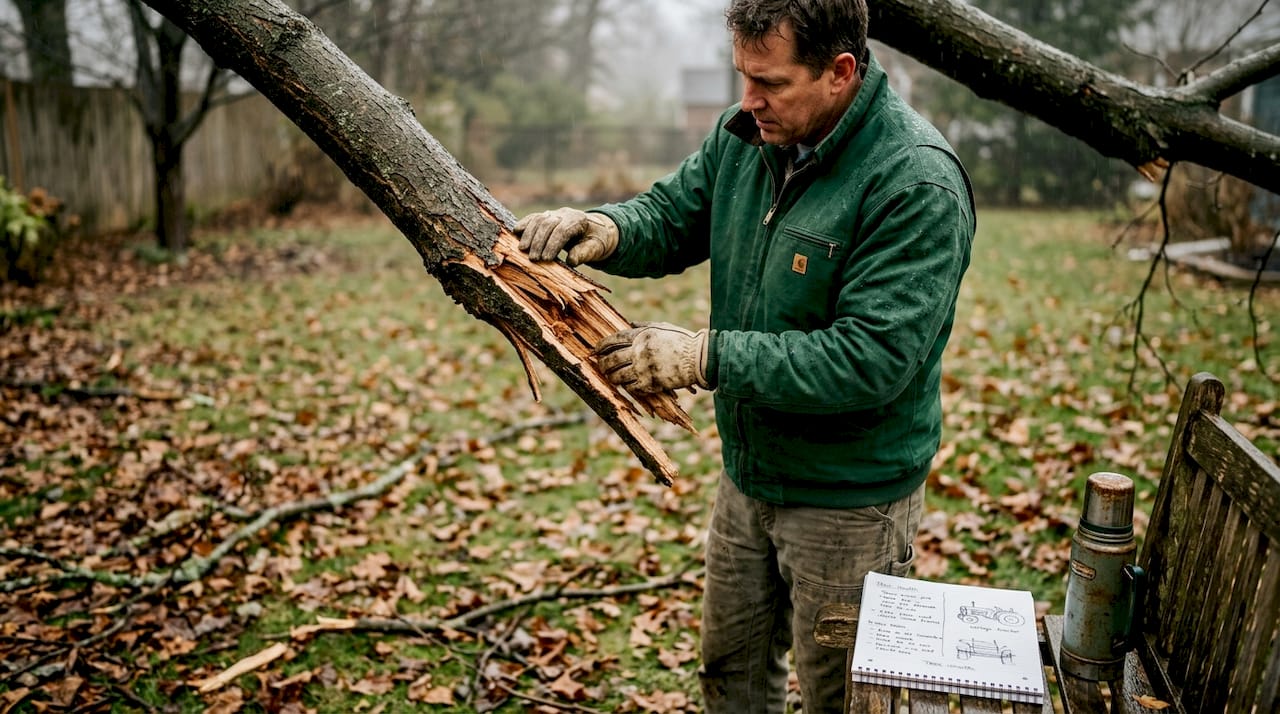
Pro Tip: Walk your property after a storm but stay well clear of any tree near a structure or power line. Your job is to observe and document, not to touch or attempt removal.
The Rhode Island Department of Environmental Management confirms that structured storm response requires assessing damage, prioritizing work, and hiring a licensed arborist before acting. Skipping the assessment step leads to rushed removals that miss the most dangerous trees while wasting money on lower-priority work.
What qualifications should you look for in a storm damage tree service?
Credentials separate qualified professionals from opportunists who show up after every major storm. The industry standard for tree care expertise is certification through the International Society of Arboriculture, commonly called ISA certification. An ISA-certified arborist filters out unqualified workers and protects homeowners from liability when things go wrong on their property.
Credentials to verify before signing any contract:
- ISA Certified Arborist status: Searchable through the ISA’s public directory at treesaregood.org
- General liability insurance: Covers property damage caused by the crew during removal
- Workers’ compensation insurance: Protects you if a worker is injured on your property
- State contractor license: Required in most states for tree work above a certain dollar threshold
- Line-clearance arborist certification: Mandatory for any work near electrical infrastructure
The University of Florida IFAS states that proof of insurance and certified arborist status are the two non-negotiable requirements when hiring for post-hurricane cleanup. Specialized skills and proper insurance do increase costs, but they protect you from far larger financial exposure.
| Credential | Why it matters |
|---|---|
| ISA Certified Arborist | Confirms formal training in tree biology, risk assessment, and safe removal |
| General liability insurance | Covers structural damage to your property during the job |
| Workers’ compensation | Removes your legal exposure if a crew member is injured on site |
| Line-clearance certification | Required by law for work within proximity of energized power lines |
| State contractor license | Verifies legal authorization to perform paid tree work in your state |
Reputable companies provide proof of all the above without hesitation. If a contractor deflects, delays, or claims their insurance “is on file somewhere,” treat that as a disqualifying response. Ask for certificates of insurance addressed to you, not generic copies.
Pro Tip: Call the insurance company listed on the certificate directly to confirm the policy is active. Fraudulent certificates are common in post-storm markets.
How to coordinate with your insurance company during post-storm tree removal
Homeowners insurance covers tree debris removal under specific conditions, and the limits are lower than most property owners expect. Standard policies cover up to $1,000 for debris removal with a per-tree maximum of $500, and coverage applies primarily when the fallen tree has damaged a covered structure such as your home, garage, or fence. A tree that falls in your yard without hitting a structure may receive no coverage at all, even if removal costs are significant.
Steps to protect your claim before any cleanup begins:
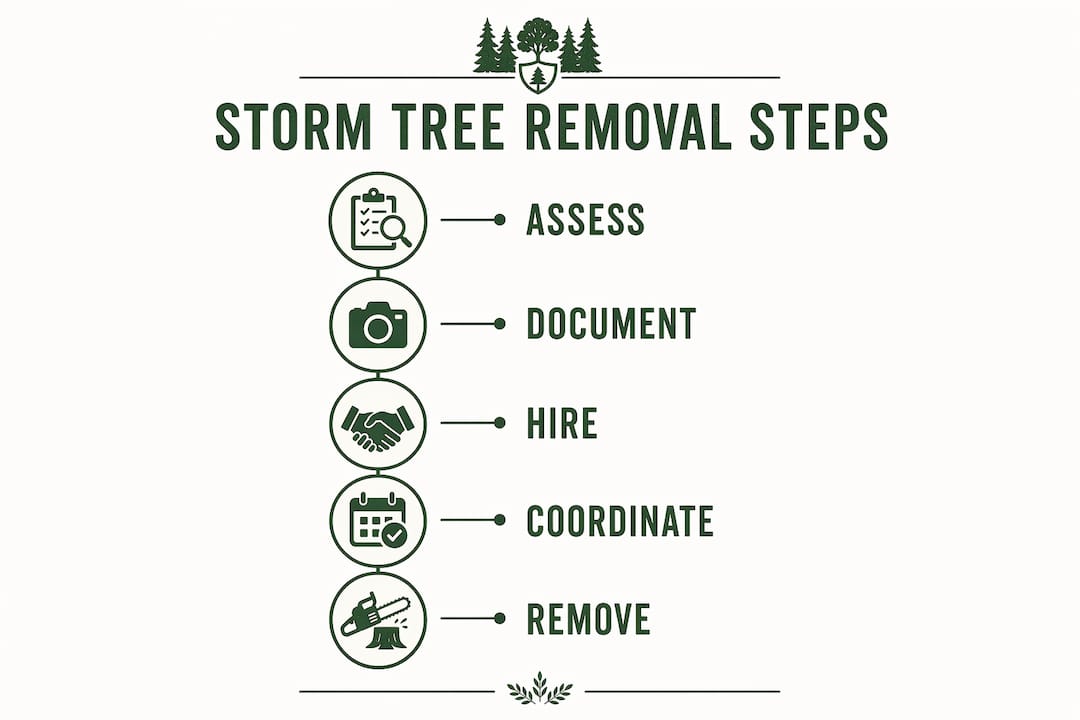
- Photograph every damaged tree from multiple angles before touching anything
- Document contact points where trees or limbs are resting on structures
- Write down the date and time of the storm and the date you discovered each hazard
- Request a written assessment from your arborist before removal begins
- Notify your insurance company and get a claim number before authorizing work
Premature cleanup can hinder claim support, and well-documented assessments increase the likelihood that removal costs qualify for coverage. Insurance adjusters need evidence of what existed before the cleanup crew arrived.
The distinction between damage to a covered structure versus damage to a driveway or open yard is a common source of claim disputes. A tree blocking your driveway without touching your home may fall outside standard debris removal coverage. Confirm this boundary with your insurer before assuming the cost is covered. Your arborist’s written report, combined with your own photo documentation, gives the adjuster the clearest possible picture of the pre-removal condition.
How to avoid scams when hiring emergency tree removal services
Post-storm scams targeting homeowners are predictable and well-documented. KIRO 7 reported that scams increase during storm cleanup periods, with fraudulent contractors using high-pressure tactics to extract large upfront payments before disappearing. The post-storm rush creates exactly the conditions scammers rely on: urgency, stress, and a shortage of available legitimate crews.
Red flags that indicate a fraudulent or unqualified contractor:
- Arrives unsolicited at your door immediately after a storm
- Quotes a price verbally with no written estimate
- Demands a large cash deposit before starting work
- Cannot produce a certificate of insurance on request
- Pressures you to decide immediately or “lose the spot”
- Offers a price dramatically lower than other bids
Legitimate storm damage tree service companies do not require large upfront deposits. Many reputable contractors collect payment only after the work is complete and you have inspected the results. Getting multiple bids with verified licensing is the single most effective defense against overpaying or being defrauded.
Pro Tip: You should be the one selecting your contractor, not the other way around. If someone knocked on your door first, that alone is reason to verify their credentials more carefully than you otherwise would.
Use your state’s contractor licensing board website to confirm a company’s license status before signing anything. This takes under five minutes and eliminates a large category of risk.
What safety considerations apply to storm-related tree removal?
Electrical hazards represent the highest-risk scenario in any post-storm tree cleanup. Only qualified line-clearance arborists are authorized to work near power lines, and they must coordinate directly with the power company before beginning. Homeowners should treat every downed or contacted power line as energized, regardless of appearance.
Safety rules that apply to every storm removal situation:
- Never approach a tree that is in contact with or near a power line
- Report downed lines and tree-on-line contact to your utility company immediately
- Do not attempt to cut or move any tree touching electrical infrastructure
- Keep children and pets away from all storm-damaged trees until a professional has assessed them
- Confirm that your hired crew uses full personal protective equipment, including helmets, chainsaw chaps, and eye protection
“Homeowners should report limbs on power lines to the utility company and assume all lines are energized until the utility confirms otherwise.” — University of Florida IFAS, Cleaning Up After a Hurricane
Trees near utility lines require a line-clearance arborist, a credential distinct from a standard ISA certification. This specialist has additional training in electrical safety and works under protocols set by the utility provider. Hiring a general tree crew for this specific scenario creates serious legal and safety exposure for the property owner.
For complex removals away from power lines, professional crews use equipment including aerial lifts, rigging systems, and wood chippers that are not available to homeowners. The physical risk of chainsaw work at height, combined with the unpredictability of storm-damaged wood, makes DIY removal genuinely dangerous even for experienced homeowners.
Key takeaways
Hiring certified, insured tree removal professionals after a storm is the single most effective way to protect your property, your safety, and your insurance claim.
| Point | Details |
|---|---|
| Assess before acting | Document all damage with photos and notes before any tree is touched or removed. |
| Verify ISA certification | Confirm arborist credentials through the ISA public directory before signing a contract. |
| Confirm insurance coverage | Request active certificates of liability and workers’ compensation addressed to you. |
| Coordinate with your insurer | Notify your insurance company and get a claim number before authorizing removal work. |
| Avoid unsolicited contractors | Reject door-to-door offers and get at least two to three written bids from verified companies. |
What I’ve learned from watching homeowners navigate post-storm hiring
The most consistent mistake I see is speed without verification. A tree is on the roof, the homeowner is panicked, and the first person who shows up with a chainsaw gets hired. That decision costs some homeowners thousands of dollars in overcharges, and it costs others far more when an uninsured worker is injured on their property.
The second mistake is underestimating hidden damage. A tree that lost two branches in a hurricane may have a root system that shifted six inches underground. That tree is now a hazard, and it will not announce itself before it falls. An ISA-certified arborist can identify that risk in a single site visit. A general laborer cannot.
My honest recommendation is to build your contractor list before a storm hits. Identify two or three certified tree removal companies in your area, confirm their credentials, and save their contact information. When a storm comes through, you call your vetted list instead of answering the door. That one preparation step eliminates most of the risk covered in this article.
The insurance coordination piece also gets skipped far too often. Homeowners clean up the yard, then call their insurer, then discover the documentation window has closed. Take the photos first. Make the call first. Then authorize the work. That sequence protects your claim.
— SEO
How Salvationlandmanagement handles storm damage tree removal in Charleston
Salvationlandmanagement serves residential and commercial property owners across the Charleston Lowcountry with professional storm damage tree removal backed by proper credentials, full insurance coverage, and equipment suited for jobs of any complexity. The team responds quickly after storm events, provides written assessments before any work begins, and communicates clearly throughout the process so you can coordinate with your insurance company without delays. For properties requiring more than tree removal, Salvationlandmanagement also offers land clearing services to restore your property fully after major storm damage. Contact Salvationlandmanagement for a written estimate and let a qualified crew handle the hazardous work safely and on schedule.
FAQ
How soon should you hire tree removal after a storm?
Contact a certified arborist within 24 hours of a storm if any tree is touching a structure, leaning toward a building, or near a power line. Delayed assessment of these situations increases structural and safety risk significantly.
Does homeowners insurance cover storm tree removal?
Standard homeowners insurance covers debris removal up to $1,000 with a $500 per-tree limit, but only when the tree has damaged a covered structure. Trees that fall in open yards without hitting a structure typically receive no coverage.
What is an ISA-certified arborist?
An ISA-certified arborist is a tree care professional who has passed a certification exam administered by the International Society of Arboriculture, confirming expertise in tree biology, risk assessment, and safe removal practices.
Can a homeowner remove a storm-damaged tree themselves?
Homeowners can remove small, grounded debris safely, but any tree near a structure, leaning at an angle, or in contact with power lines requires a licensed professional. DIY removal of high-risk trees creates serious injury and liability exposure.
How do you verify a tree removal company’s credentials?
Search the ISA’s public directory at treesaregood.org to confirm arborist certification, check your state’s contractor licensing board for a valid license, and request active certificates of insurance before authorizing any work.